What does it take to clear the NISM Series V-A exam, and then keep the certificate valid for as long as you distribute mutual funds? The exam itself is simple to describe: 100 questions in two hours, 50% to pass, no negative marking. What first-time distributors tend to misread is the three-year clock that starts on exam day, and the one document that decides what the exam can ask. This post works from NISM's own examination, FAQ and CPE pages as they stood in September 2026.
The exam, as NISM states it
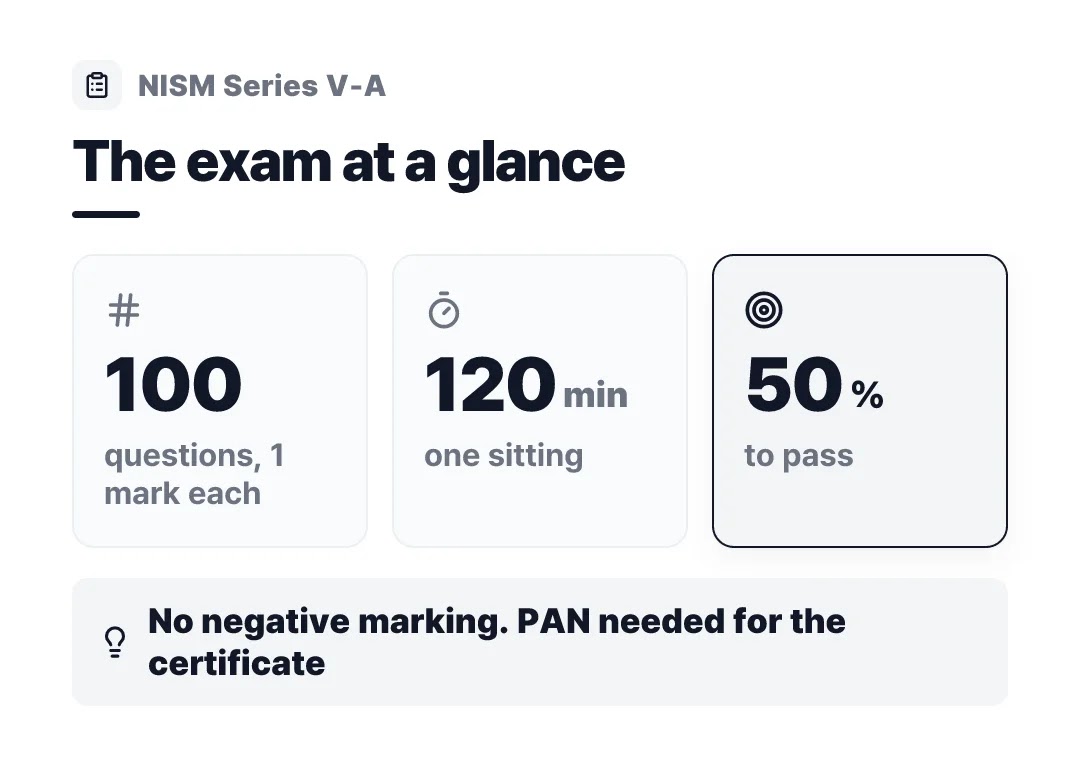
The NISM-Series-V-A: Mutual Fund Distributors Certification Examination has 100 questions of one mark each, to be completed in 120 minutes. The passing score is 50%, and NISM states plainly that there is no negative marking. The fee is ₹ 1,500, with payment gateway charges on top. One practical detail catches people out: the passing certificate is issued only to candidates who have furnished their PAN in their registration details, so check your profile before you book a slot.
NISM describes the test objectives in four broad areas: the basics of mutual funds and their structure, distribution and scheme evaluation, the legal, accounting, valuation and taxation aspects, and financial planning as a way of building client relationships. You do not have to buy the official study material separately. According to NISM's FAQ, you receive a soft copy of the workbook after enrolling for the exam, and it can also be downloaded from NISM's portal.
The 12 units, and the workbook version that defines them
For this exam, the workbook is the syllabus. NISM revises it periodically, and questions are set from the version in force, so the version date printed on your copy matters more than any list you find online. NISM's examination and curriculum pages do not state the current version date, and preparation sites quote different editions. For that reason this post does not reproduce chapter-wise marks: they belong to a specific edition, and the right place to read them is the test objectives section of the workbook you receive at enrolment.
What does not change between editions is the structure. NISM's curriculum lists 12 units, and they fall into three kinds of question.
| Unit | Title | What the questions tend to test |
|---|---|---|
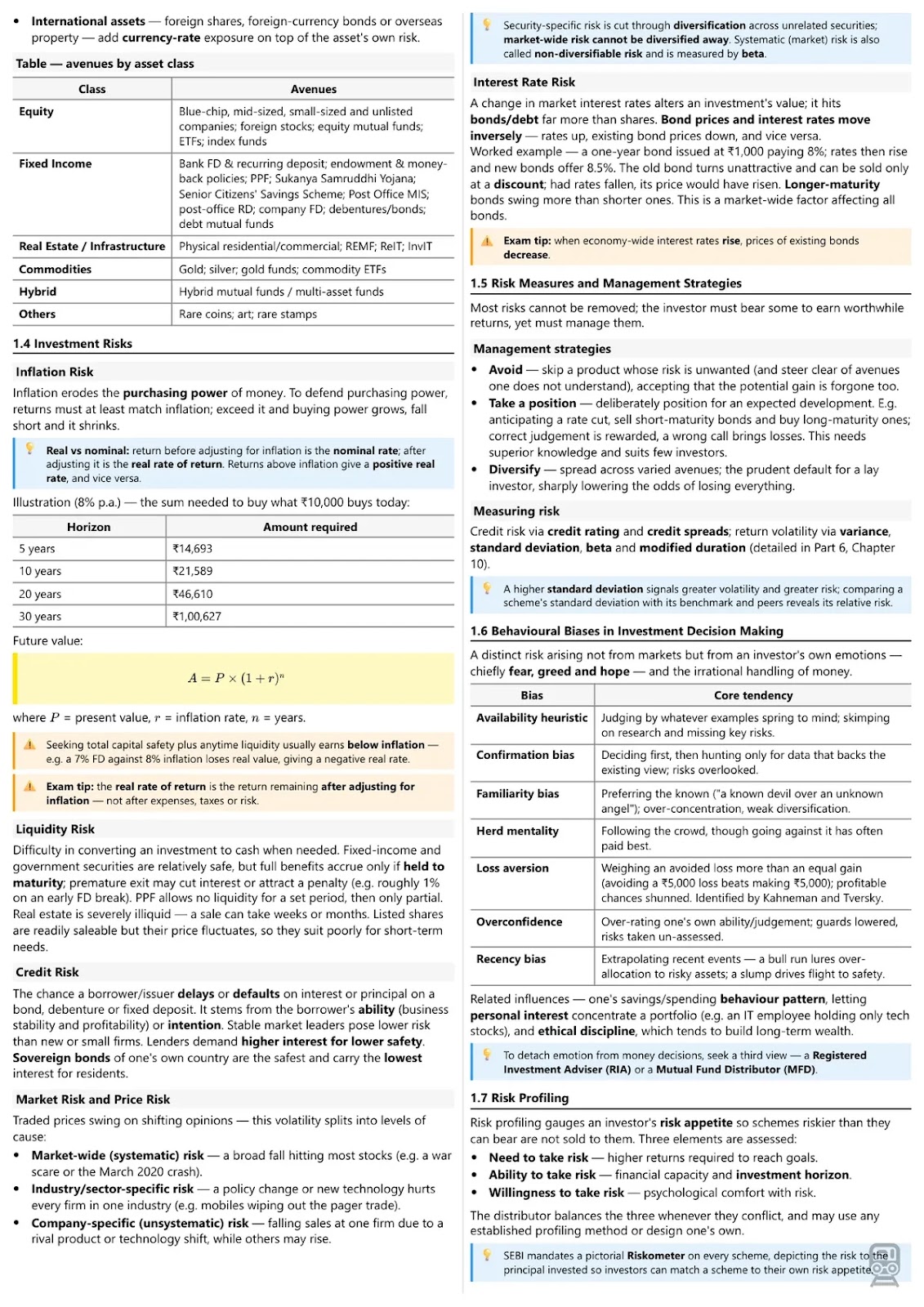
| I | Investment Landscape | concepts, risk types, investor behaviour |
| II | Concept and Role of a Mutual Fund | concepts and scheme types |
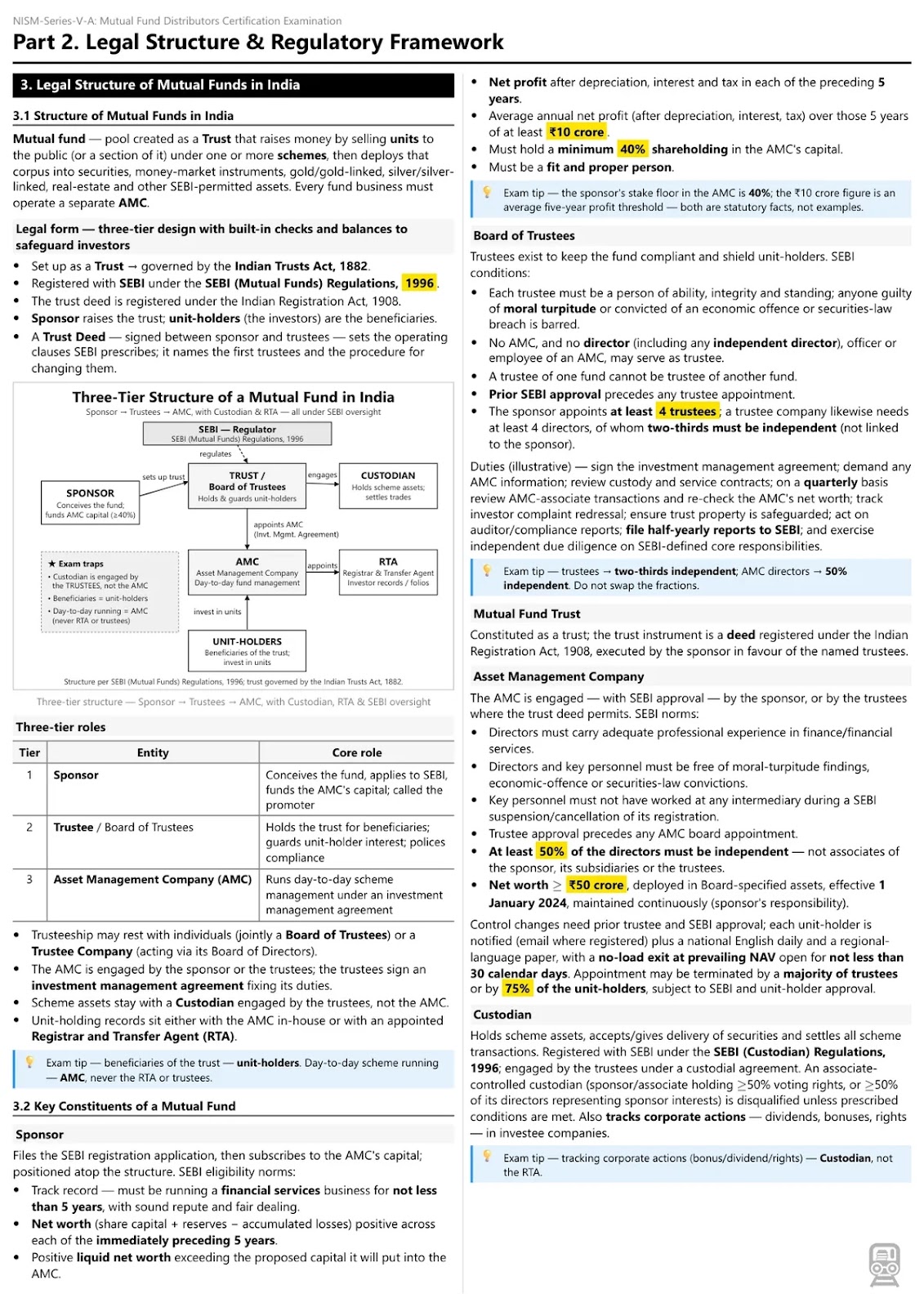
| III | Legal Structure of Mutual Funds in India | who does what: sponsor, trustee, AMC, custodian |
| IV | Legal and Regulatory Framework | rules and investor protection |
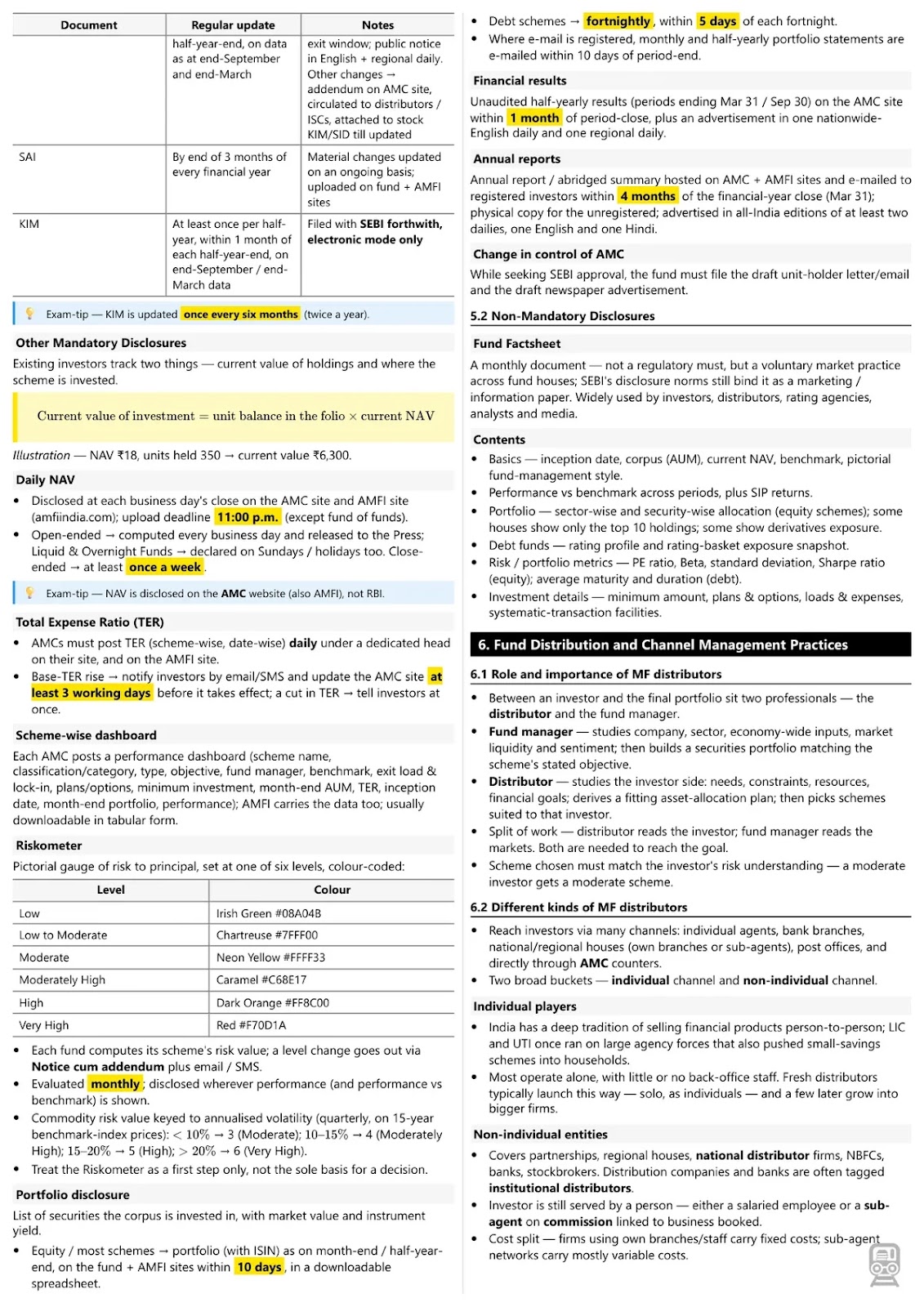
| V | Scheme Related Information | disclosure documents and their updates |
| VI | Fund Distribution and Channel Management Practices | distributor roles and conduct |
| VII | Net Asset Value, Total Expense Ratio and Pricing of Units | calculation |
| VIII | Taxation | rules applied to cases |
| IX | Investor Services | processes and timelines |
| X | Risk, Return and Performance of Funds | calculation and interpretation |
| XI | Mutual Fund Scheme Performance | interpretation against benchmarks |
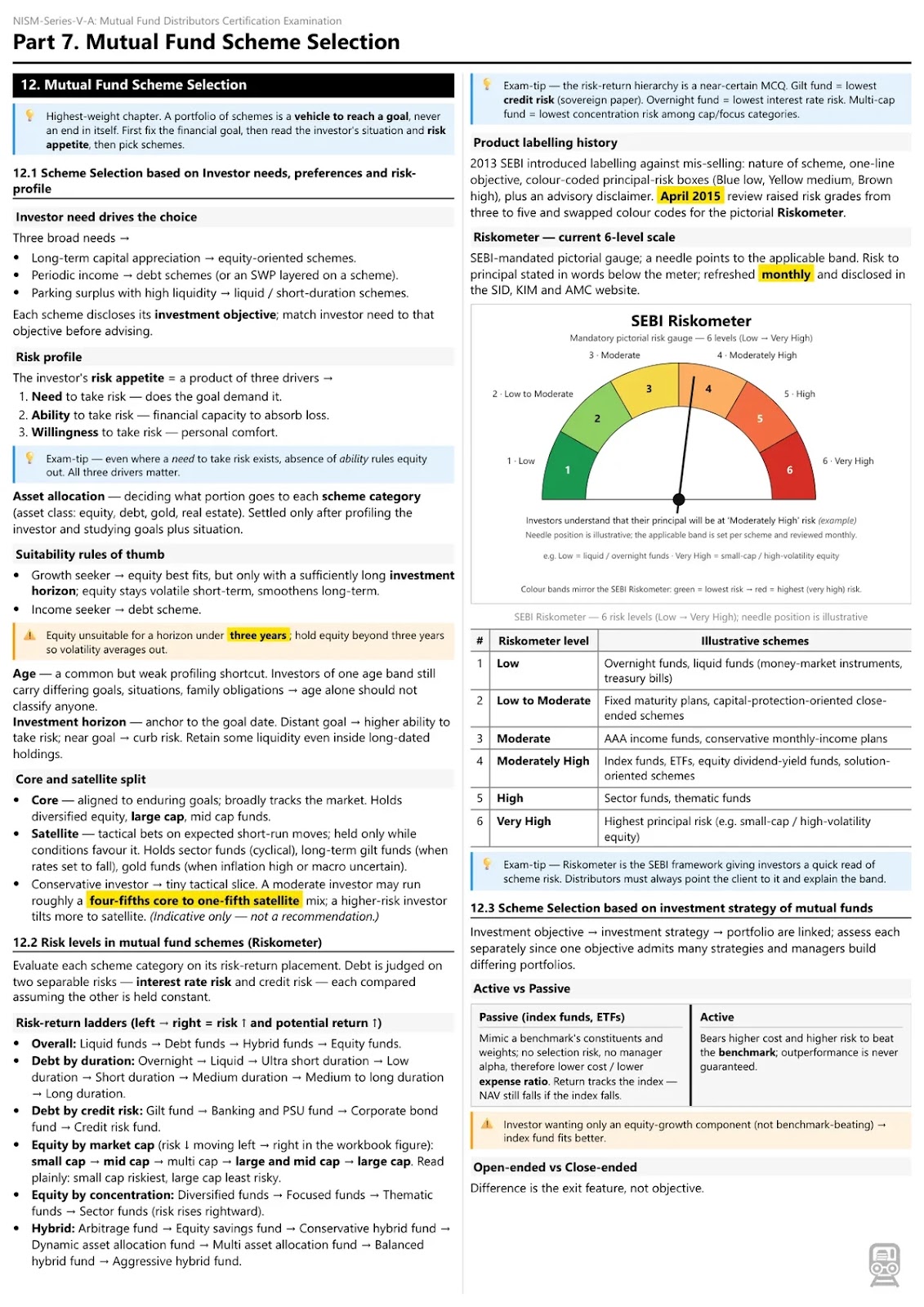
| XII | Mutual Fund Scheme Selection | matching schemes to investor profiles |
The unit titles are NISM's; the third column is Rattanote's reading of how each unit is examined, not an official classification. The pattern is useful when you plan your weeks: three of the 12 units, VII, VIII and X, reward pen-and-paper practice, and the rest reward being able to tell similar-sounding roles and rules apart.
The three-year clock: validity, CPE and your ARN
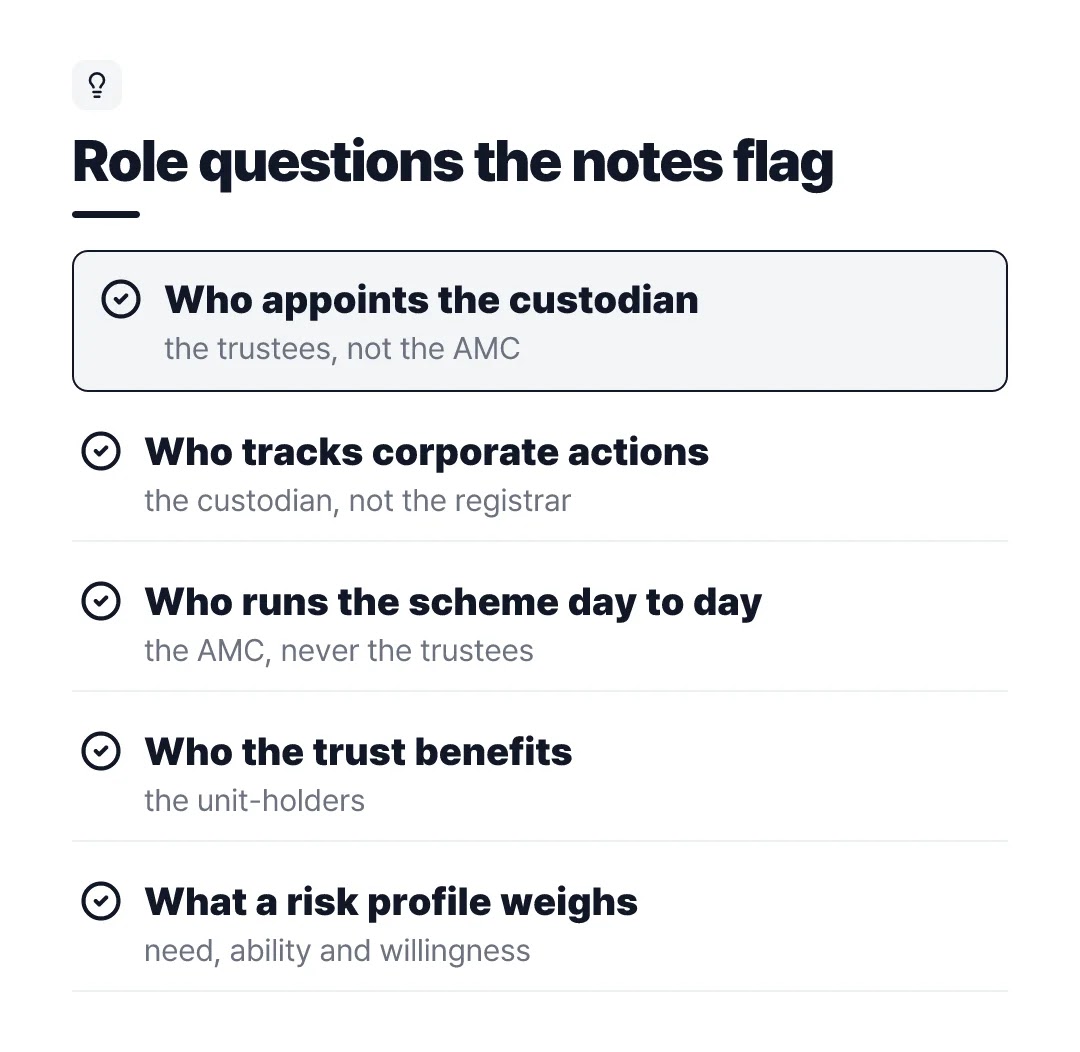
The certificate is valid for three years from the date of the examination. Your ARN depends on holding a valid certificate, so the date on your pass certificate effectively sets the renewal date for your distribution business too. There are two ways to renew: pass the certification examination again before the certificate expires, or complete NISM's Continuing Professional Education (CPE) programme for mutual fund distributors.
| Point on the clock | What NISM's rules say | What it means in practice |
|---|---|---|
| Exam day | Certificate valid for 3 years from the date of the exam | Note this date; everything else is counted from it |
| Last 12 months before expiry | CPE can be completed in this window only | Attending earlier does not count towards renewal |
| Classroom CPE | One day, about six hours, with a test at the end | Plan a full working day, not an evening |
| After successful CPE | Certificate revalidated for 3 years from its expiry date | No gap is created by renewing early in the window |
| Alternative route | Pass the certification exam again before expiry | Useful if you missed the CPE window but not the expiry |
The rules in the middle column come from NISM's CPE and FAQ pages; the practical reading is Rattanote's. The one mistake to avoid is letting the certificate lapse, because both renewal routes are framed around the expiry date. An online eCPE option also exists; check its current duration and fee on NISM's site before choosing between the two formats.
How to prepare as a working professional
Most candidates prepare around a job, so the question is where to spend the limited hours. Start with the calculation units, VII and X, and work every example in the workbook on paper: NAV and expense ratio in unit VII, return and risk measures in unit X. These are the questions where reading alone does not help, and one evening of practice on each pays back more than rereading a regulatory chapter.
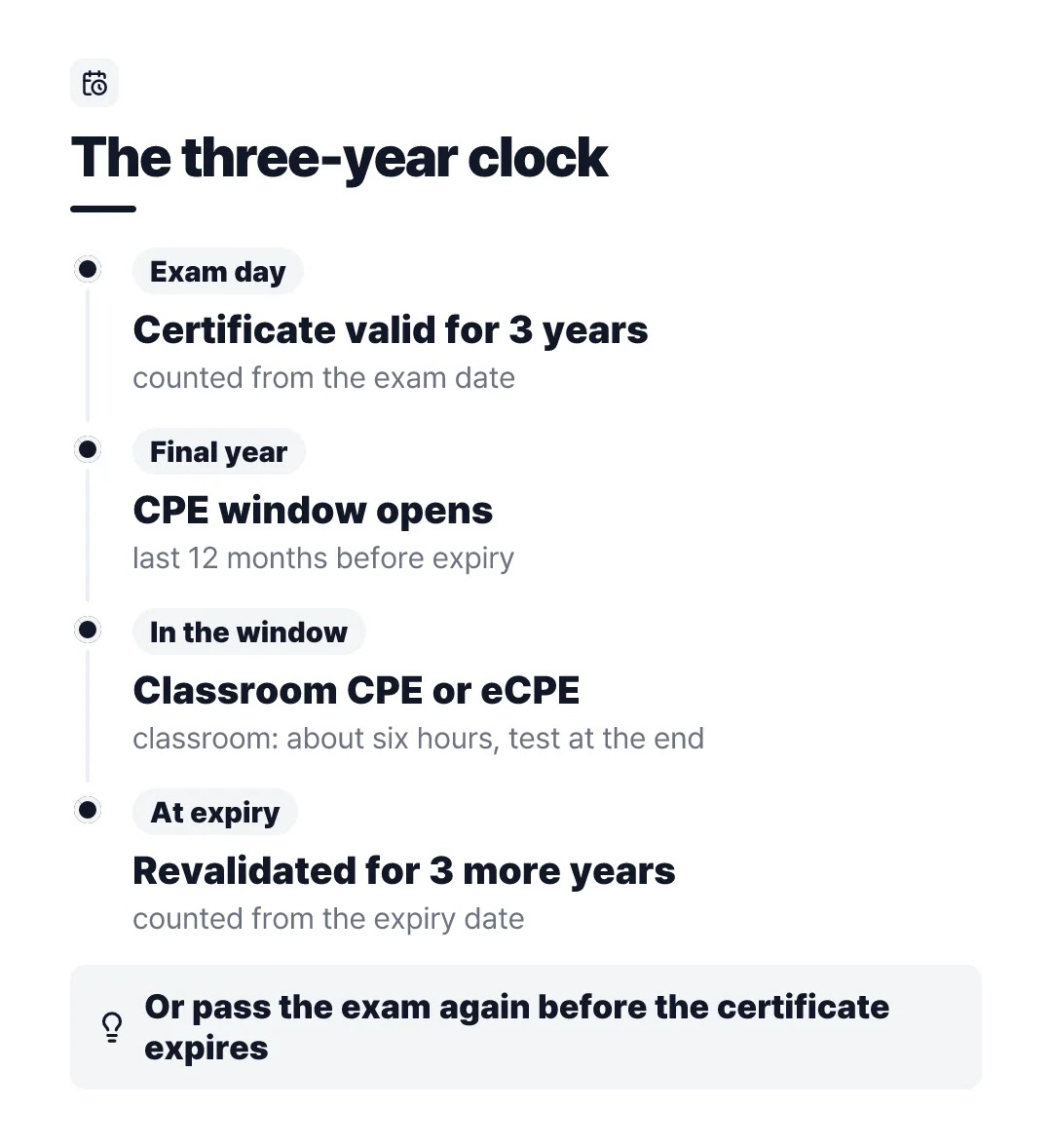
The structure units need a different habit. Unit III and unit IV are full of look-alike roles, and the questions test whether you can keep them apart: the custodian is appointed by the trustees rather than the AMC, tracking corporate actions is a custodian job and not the registrar's, and day-to-day scheme management is the AMC's alone. Write these as one-line pairs and revise them in the final week, when similar options start to blur.
Leave unit XII for last and treat it as applied reading rather than memorisation. It asks you to match schemes to an investor's need, ability and willingness to take risk, and most wrong options fail on one of those three. Because there is no negative marking, attempt every question in the exam hall.
What the 35 pages cover
The Rattanote NISM V-A revision notes are an essentials-first capsule: 35 pages that follow the 12 units in NISM's order, written for candidates who have already been through the workbook once or who need a compact last-mile revision. They do not reproduce the full workbook, and some material is covered briefly or left out. The previews show the format, with short topic blocks, role tables for the legal structure units and boxed exam tips on the distinctions questions tend to test.
Use them alongside the official workbook rather than instead of it, especially since the workbook comes with your enrolment and defines the syllabus. The notes do not include mock tests, previous year questions or a question bank. The PDF is priced at ₹ 299.
👉 NISM V-A revision notes — PDF (35 pages)
https://www.rattanote.com/library/nism-va-mfd-revision-notes
FAQ
How long is the NISM V-A certificate valid?
Three years from the date of the examination. To continue, you either complete the Mutual Fund Distributors CPE in the last 12 months before expiry or pass the certification exam again before the certificate expires.
Is there negative marking in the NISM V-A exam?
No. NISM states that there is no negative marking, and the passing score is 50% of 100 marks.
Do I have to buy the NISM V-A workbook?
No. NISM provides a soft copy of the workbook after you enrol for the exam, and it can be downloaded from NISM's portal. Check the version date on its cover, since that edition defines what the exam covers.
To sum up
The NISM V-A exam is 100 questions, two hours and a 50% pass mark, set from whichever workbook edition is current. Note your exam date on the day you pass, because the three-year clock and the CPE window are counted from it. Which unit do you expect to spend the most time on?
📄 35 pages, built around NISM's 12 units
https://www.rattanote.com/library/nism-va-mfd-revision-notes
Rattanote is an independent publisher. These are unofficial revision notes and are not affiliated with, endorsed by or approved by NISM, SEBI or AMFI. For exam rules, fees and the current workbook, the information published on nism.ac.in is final.