NBEMS will hold an additional FMGE on 31 October 2026, and for anyone sitting it the useful question is not how to cover all 19 subjects in seven weeks but where 150 of the 300 marks can realistically come from. The session was announced in an NBEMS notice dated 10 September 2026, after the June 2026 attempt cleared only about one in eight candidates who appeared. This post works from that notice, the June result figures and the subject-wise marks distribution NBEMS publishes in its information bulletin.
The October 2026 session, and the June result behind it
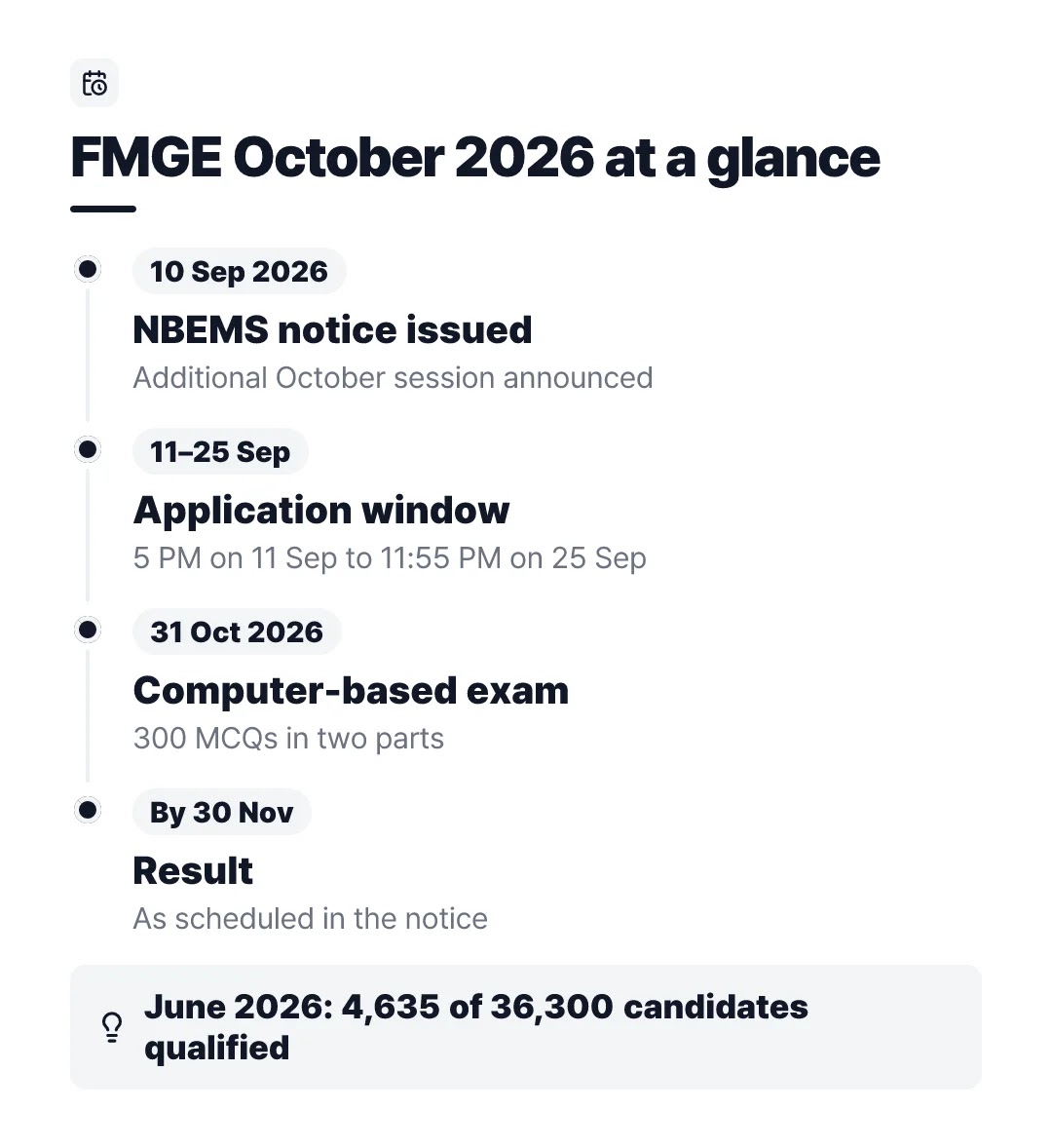
According to the notice, the online application window opens at 5 PM on 11 September 2026 and closes at 11:55 PM on 25 September 2026. The computer-based exam is on 31 October 2026, and the result is scheduled to be declared by 30 November 2026. Reports indicate that the fee for this session has been revised, so check the figure in the information bulletin on natboard.edu.in before you pay rather than relying on the June amount.
The context matters. In June 2026, 37,448 candidates registered and 36,300 appeared, and only 4,635 qualified, which is roughly 12.8% of those who sat the exam. According to reports, candidate groups objected to the difficulty and to video-based clinical questions that appeared without prior notice. A review committee set up by NBEMS reportedly recommended three sittings a year and a one-year deferral of video questions, but no grace marks. The October session is the first concrete outcome; treat the rest as recommendations until NBEMS notifies them.
The exam pattern in one paragraph
The FMGE is a single paper of 300 multiple-choice questions, taken in two parts of 150 questions with 150 minutes each, in computer-based mode and in English. Each correct answer carries one mark and there is no negative marking. To qualify you need 150 marks out of 300, which is 50%. There is no sectional cut-off, so marks lost in one subject can be made up in another, and that single rule is what makes weightage-based preparation work for this exam.
Where the 300 marks sit
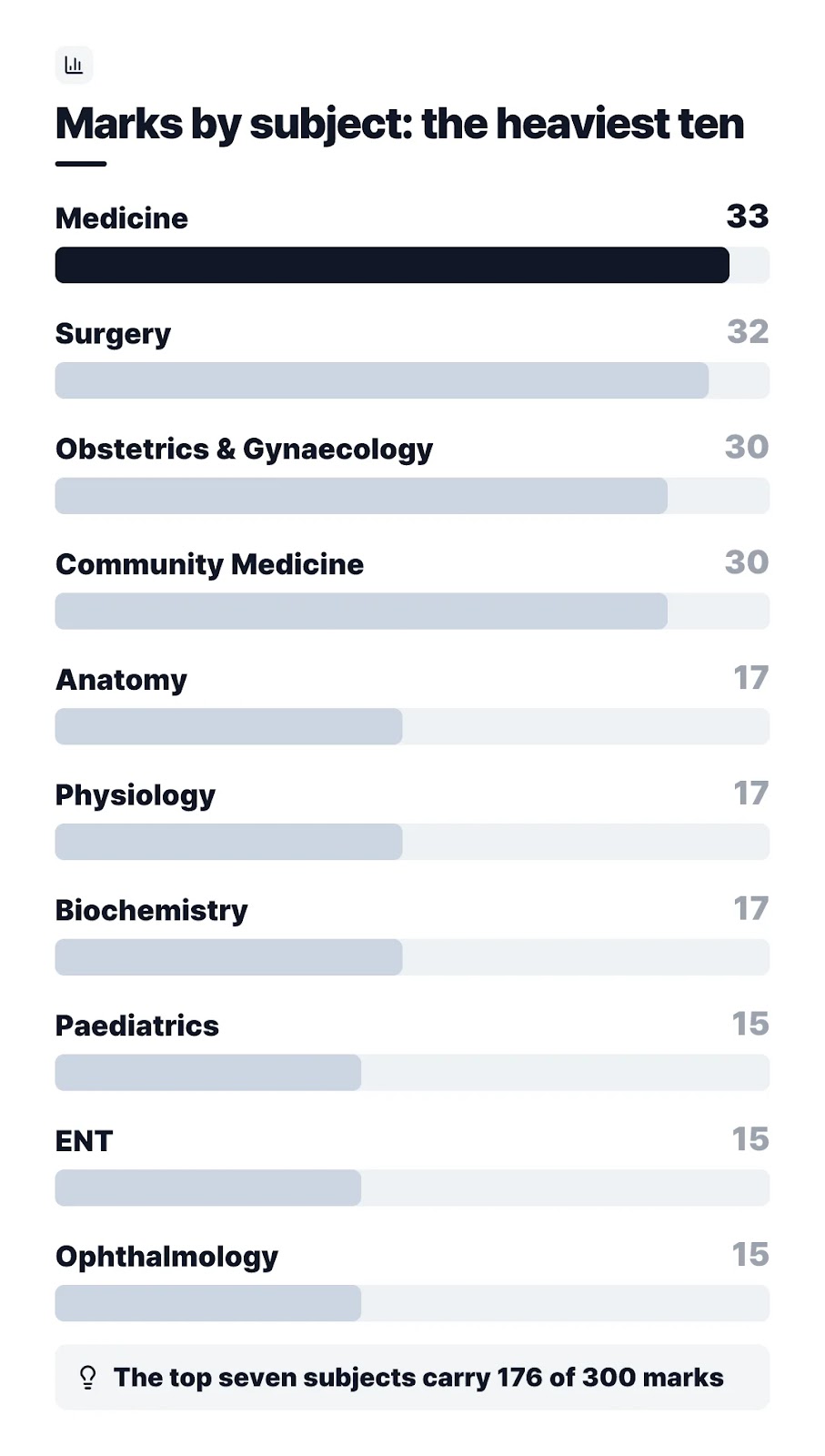
NBEMS allocates 100 marks to the pre-clinical and para-clinical subjects and 200 to the clinical subjects. Grouping the 19 subjects by their marks gives a clearer picture of where preparation time pays back.
| Block | Subjects (marks) | Marks | Share of 300 | Running total |
|---|---|---|---|---|
| Big four clinical | Medicine (33), Surgery (32), OBG (30), Community Medicine (30) | 125 | 41.7% | 125 |
| Pre-clinical trio | Anatomy, Physiology, Biochemistry (17 each) | 51 | 17.0% | 176 |
| Para-clinical | Pathology, Microbiology, Pharmacology (13 each) | 39 | 13.0% | 215 |
| Mid-size clinical | Paediatrics, ENT, Ophthalmology (15 each) | 45 | 15.0% | 260 |
| Forensic Medicine | Forensic Medicine (10) | 10 | 3.3% | 270 |
| Five-mark subjects | Psychiatry, Dermatology, Anaesthesiology, Orthopaedics, Radiodiagnosis, Radiotherapy (5 each) | 30 | 10.0% | 300 |
The subject-wise marks follow the distribution in the NBEMS information bulletin; the grouping, shares and running totals are Rattanote's own calculation. The seven largest subjects together carry 176 marks, comfortably above the 150 needed to qualify. That does not mean you can ignore the rest, because nobody scores full marks in a block, but it tells you which subjects deserve your first and second revision cycles.
How to split the next seven weeks
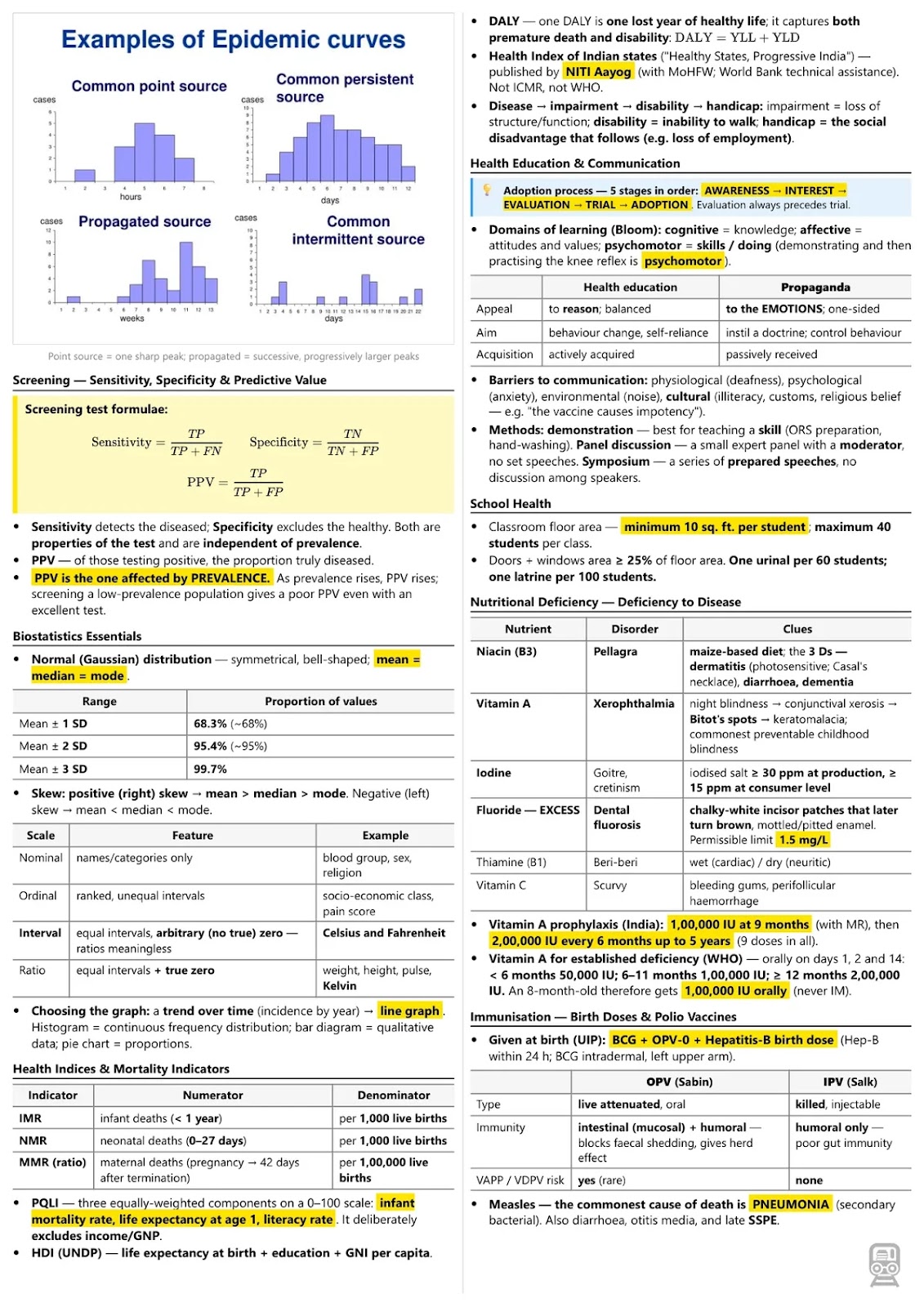
Start with the big four clinical subjects, because they carry 125 marks and their questions reward recall of standard management rather than depth. Community Medicine in particular rewards a short list of repeat areas: immunisation schedules, epidemiological study designs, screening test parameters and biostatistics formulas. These are compact enough to revise in a few sittings and are often the fastest marks on the paper. Medicine and Surgery are larger, so work through them system by system with a fixed number of topics per day.
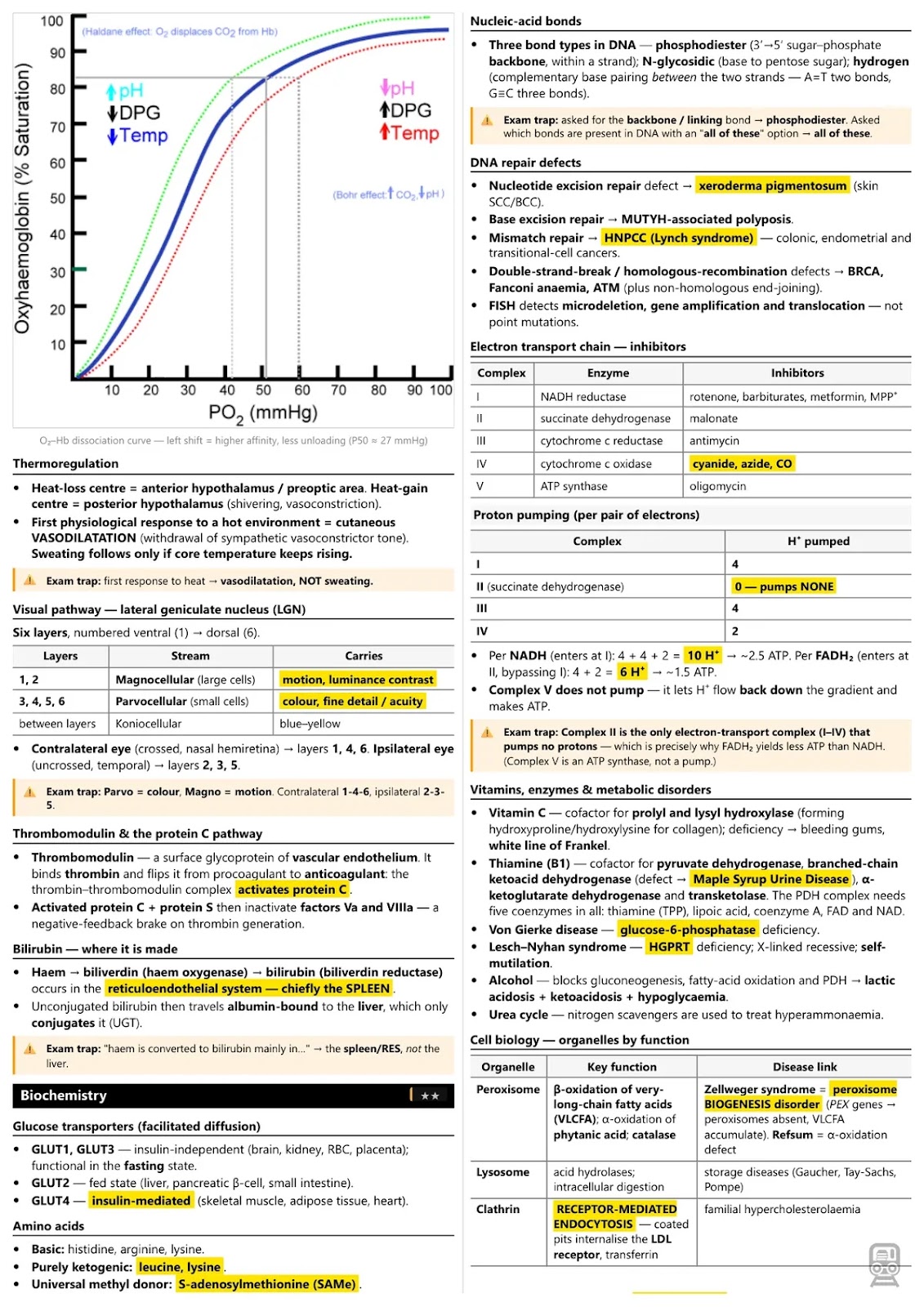
The pre-clinical trio comes next. Anatomy, Physiology and Biochemistry carry 51 marks between them, and many of those questions turn on a single discriminating fact: which electron transport complex pumps no protons, which layers of the lateral geniculate nucleus receive the contralateral eye, which enzyme is missing in a named storage disease. These are exactly the facts that fade fastest if they are revised only once, so keep them on a short loop until the exam.
The para-clinical block and the mid-size clinical subjects together account for another 84 marks, and they are easier to revise alongside the big four than on their own. Pharmacology sits naturally next to Medicine, Microbiology next to Community Medicine, and Pathology next to both Medicine and Surgery, so pairing them saves a second pass through the same diseases. Paediatrics, ENT and Ophthalmology carry 15 marks each and are self-contained enough to be finished in a few focused days once the larger subjects are in place.
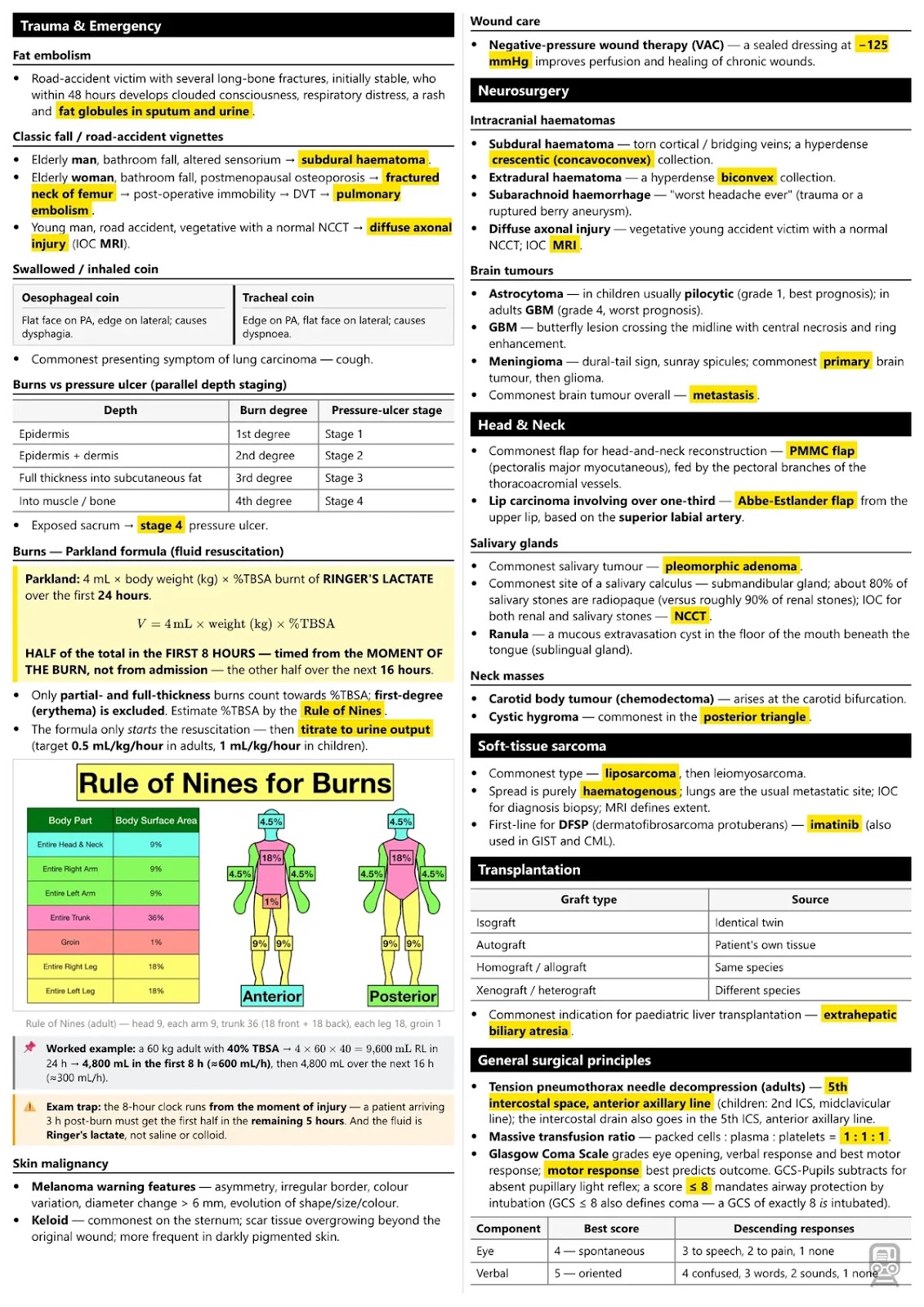
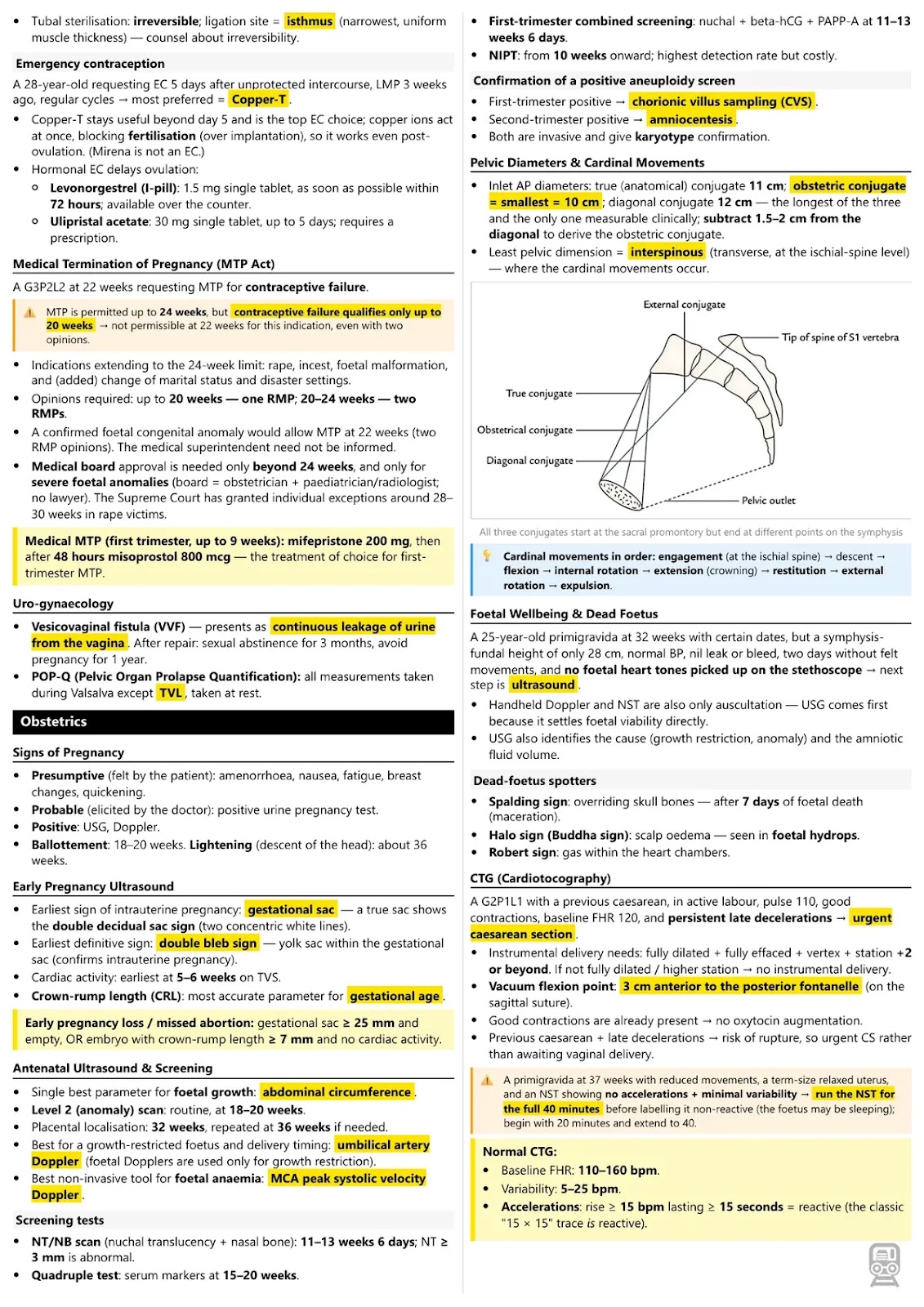
Leave the six five-mark subjects for the final fortnight and treat them as one block of 30 marks rather than six separate subjects. Because there is no negative marking, attempt every question, including the ones you are unsure of. If the June video-based format returns, the clinical recognition skills you build on images in Surgery, Dermatology and Obstetrics will carry over; NBEMS has not confirmed the format for October.
What the 43 pages cover
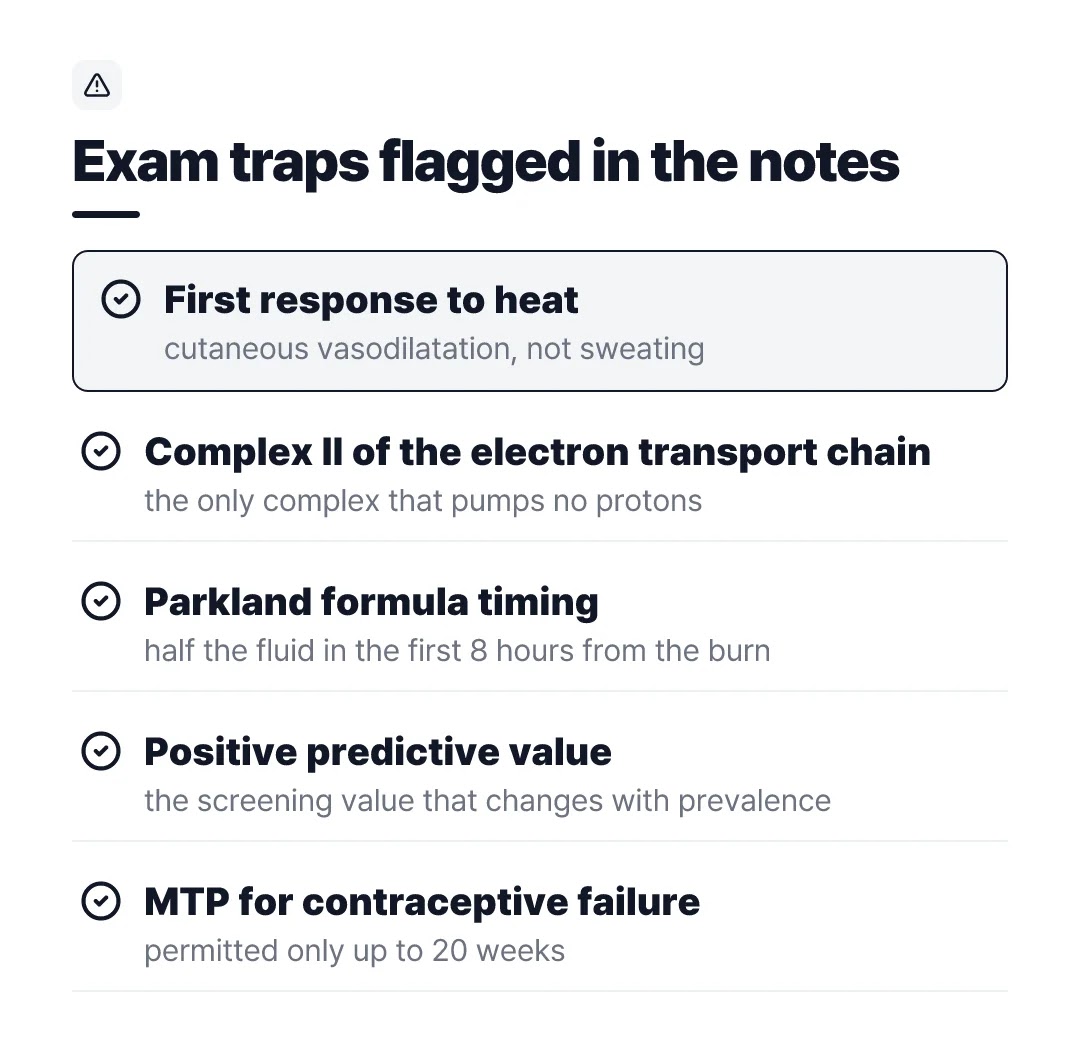
The Rattanote FMGE revision notes condense the MBBS curriculum subject by subject into 43 pages, weighted by the notified marks split and centred on the highest-weightage domains, from Medicine to Community Medicine. They are not a complete textbook replacement, and the lower-weightage subjects are covered more briefly than the big four. The previews show the approach: short topic blocks with the facts that questions turn on, and boxed exam traps such as the first physiological response to heat or the timing rule in the Parkland formula.
The notes do not include previous year questions, mock tests or a question bank, so plan your MCQ practice separately. The PDF is priced at ₹ 299 and suits a final revision cycle on top of your main preparation.
👉 FMGE revision notes — PDF (43 pages)
https://www.rattanote.com/library/fmge-screening-test-one-shot-notes
FAQ
Is FMGE being replaced by NExT?
Not yet. A draft of the NMC's amendment regulations on registration and licence to practise, reported in August 2026, keeps the FMGE as the qualifying examination for foreign medical graduates until NExT comes into force. No implementation date has been notified, so plan for the FMGE as it stands.
What is the passing mark in FMGE?
You need 150 marks out of 300, which is 50%. There is no subject-wise or part-wise cut-off; only the total counts.
Is there negative marking in FMGE?
No. Each correct answer carries one mark and wrong or unattempted answers carry zero, so leaving a question blank never helps.
To sum up
The October 2026 FMGE follows the same 300-mark pattern, and 176 of those marks sit in seven subjects. Apply before 25 September, then give your first two revision cycles to the big four clinical subjects and the pre-clinical trio. Which subject are you planning to revise first for October?
📄 FMGE short notes, arranged by actual weightage
https://www.rattanote.com/library/fmge-screening-test-one-shot-notes
Rattanote is an independent publisher. These are unofficial revision notes and are not affiliated with, endorsed by or approved by NBEMS, the National Medical Commission or any medical university. For dates, fees and eligibility, the notices published on natboard.edu.in are final.